
World Cup tickets for Iran fans revoked, says country’s federation
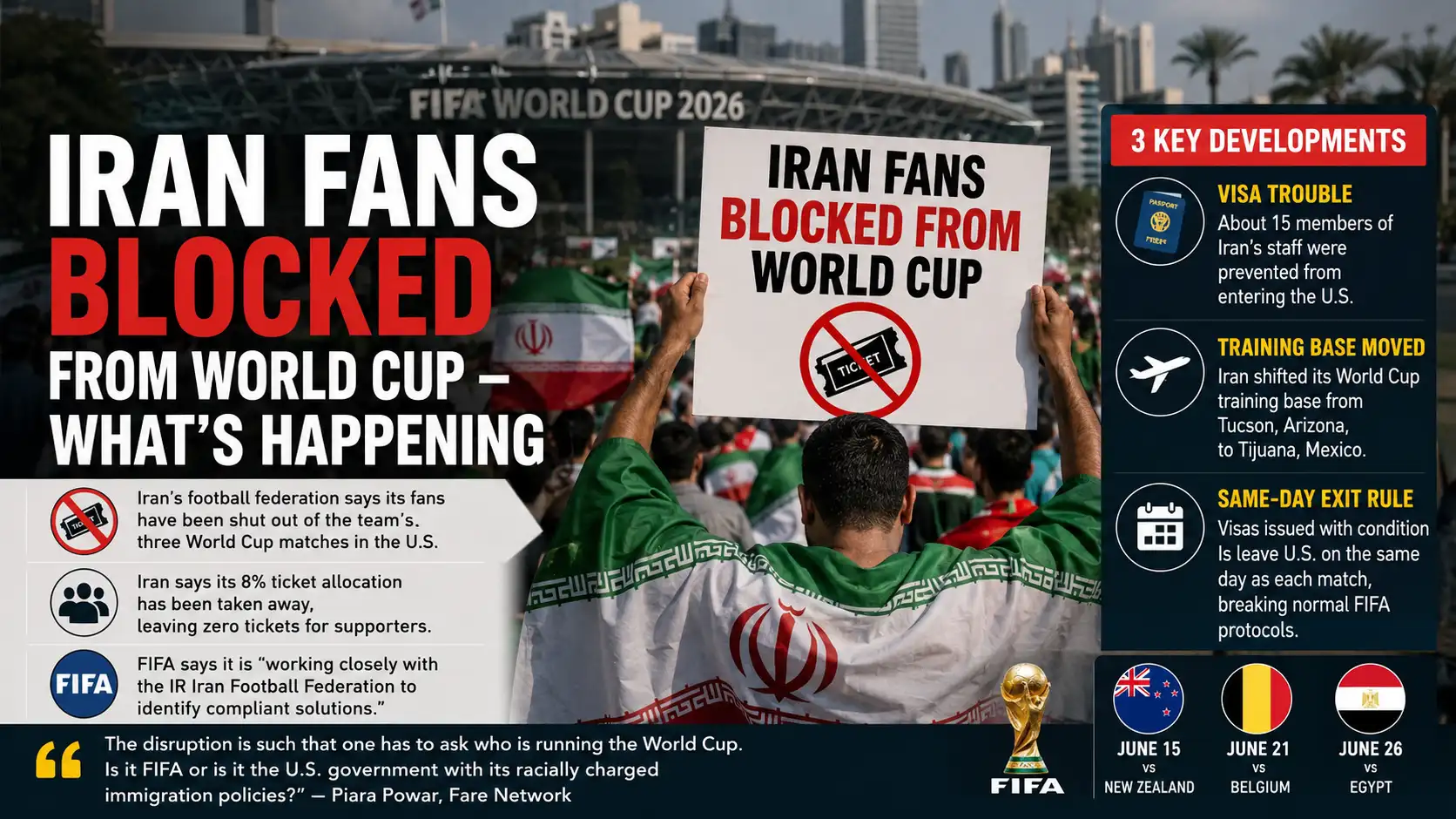
Iran Fans Blocked from World Cup — What’s Happening
Iran’s football federation says its fans have been shut out of the team’s three World Cup matches in the United States. Every country playing in the tournament is normally given 8% of stadium seats to hand out to their own supporters — but Iran says that share has now been taken away, leaving them with zero tickets to offer.
Iran’s first game is on June 15 in Los Angeles against New Zealand. Many Iranian fans had already booked flights and hotels through the official process, trusting the tickets would arrive. Now they’re stuck.
Iran’s federation accused the U.S. of sabotaging their supporters’ presence at matches due to political interference, while FIFA stated it is collaborating with the IR Iran Football Federation to find compliant solutions for Iranian fans to attend games.
Iran’s federation called it an attempt to “sabotage” their supporters’ presence and accused the U.S. of letting politics interfere with sport. FIFA said it is “working closely with the IR Iran Football Federation to identify compliant solutions” to help Iranian supporters attend matches.
Under FIFA’s standard ticketing system, every participating nation is usually given around 8% of stadium seats to distribute among its supporters. However, Iranian officials say that allocation has been removed, leaving the federation with no tickets to offer fans.
Many Iranian supporters had already booked flights, hotels, and travel packages through official channels, expecting tickets to be issued later. They now face uncertainty about whether they will be able to attend the matches.
FIFA Responds to Iran’s Concerns
FIFA, which oversees World Cup ticketing, said it is working closely with the Iranian Football Federation to find solutions.
According to FIFA, discussions are ongoing to help Iranian supporters attend matches while ensuring compliance with applicable regulations and entry requirements.
FIFA Leadership Meets Iranian Officials
In recent weeks, FIFA President Gianni Infantino and FIFA Secretary General Mattias Grafström met Iranian football officials in Turkey.
During the meeting, FIFA leaders reportedly assured Iranian representatives that the organization would continue working to address their concerns and support fan participation wherever possible.
Three Developments Adding to the Controversy
Several recent events have intensified concerns surrounding Iran’s participation in the tournament.
1. Visa Problems for Iranian Officials
Reports indicate that approximately 15 members of Iran’s administrative and management staff were unable to enter the United States because of visa-related issues.
The federation argues that these restrictions have complicated preparations for the tournament.
2. Training Base Relocated to Mexico
Iran originally planned to use Tucson, Arizona, as its World Cup training base.
However, rising tensions and logistical challenges forced the team to relocate to Tijuana, Mexico, near the U.S. border. The move has created additional travel and planning difficulties for players and officials.
3. Same-Day Exit Requirement
Iran’s ambassador to Mexico revealed that visas issued to the team reportedly came with strict conditions requiring players and staff to leave U.S. territory on the same day as each match.
This arrangement differs from FIFA’s normal tournament procedures, which typically require teams to arrive at least one day before matches to participate in official media activities and pre-match preparations.
Iran’s World Cup Schedule
Iran is scheduled to begin its World Cup campaign against New Zealand in Los Angeles on June 15.
The team will then face Belgium in Inglewood on June 21 before playing Egypt in Seattle on June 26.
These matches are expected to attract significant interest from Iranian communities around the world.
Travel Ban Raises Additional Challenges
Since last year, Iranian citizens have faced restrictions on obtaining U.S. visas under American immigration policies.
As a result, many supporters living in Iran have found it difficult or impossible to travel to the United States for the tournament.
It remains unclear how many tickets originally allocated to Iran were sold following the World Cup draw. Some may have been purchased by Iranian communities living abroad, including those already residing in North America.
Infantino’s Earlier Position on Fan Access
The current controversy has renewed attention on comments made by FIFA President Gianni Infantino in 2017.
At the time, the United States, Canada, and Mexico were preparing their successful joint bid to host the 2026 FIFA World Cup.
Infantino stressed that supporters and officials from every qualified nation must be allowed entry into host countries.
He famously stated:
“Otherwise there is no World Cup.”
Those comments are now being revisited as questions emerge over access for fans, players, and officials from certain countries.
Other Entry Issues Reported During the Tournament
Iran is not the only delegation reportedly affected by immigration complications.
Somali Referee Denied Entry
A FIFA-appointed referee from Somalia was reportedly denied entry into the United States in Miami and was later ruled out of participating in the tournament.
Iraqi Delegation Faces Difficulties
In another incident, an Iraqi player was reportedly detained for several hours after arriving in Chicago.
A photographer traveling with the Iraqi national team was also denied entry, further fueling concerns about tournament access.
Critics Question Who Is Really Running the World Cup
The incidents have drawn criticism from anti-discrimination campaigners and football observers.
Piara Powar, executive director of the Fare Network and head of FIFA’s anti-discrimination monitoring partner, questioned whether FIFA or U.S. immigration authorities ultimately control access to the tournament.
According to Powar, the growing number of travel restrictions risks overshadowing the spirit of international unity that the World Cup is meant to celebrate.
He warned that the competition is increasingly being viewed as a symbol of exclusion rather than a global celebration of football.
Conclusion
As the World Cup gets underway, the dispute over fan access, visa approvals, and immigration restrictions continues to generate controversy.
While FIFA says it is working to find solutions, Iranian officials argue that their supporters have already been unfairly affected. The outcome of these discussions could shape not only Iran’s World Cup experience but also broader debates about the relationship between politics, immigration policies, and international sport.
Read More Content about Chardham Yatra in Uttarakhand
Resources From: ESPN News